Showing posts with label chicken. Show all posts

White Wine-Braised Chicken Thighs


I've been kind of a jerk lately. Josh has put up with a lot while I've been kind of a jerk. After spending a Sunday afternoon alone, in attendance at the maudlin movie "The Vow," once I regained control of my emotions I decided to stop being a jerk. And since I don't know how to apologize/celebrate/function socially without food, I also decided to make Josh a comforting, hearty meal to apologize with.

Front and center was this braised chicken, cooked in white wine and a mirepoix with a few other winter vegetables thrown in. The resulting sauce was a rich and lovely apology for this girlfriend's bad behavior.

I'm not suggesting you screw up as an excuse to make this chicken, but if you already have, this may be a good way to wipe the slate clean.

You will need:

4 boneless, skinless chicken thighs
2 tablespoons butter
2 tablespoons olive oil, plus more for sauteeing chicken
1 large carrot, peeled and diced
2 ribs celery, diced
1 medium onion, diced
1 leek, sliced into rings
4 cloves garlic, whole
Small handful Italian (flat leaf) parsley, roughly chopped
1/8 teaspoon Herbes de Provence
1/8 teaspoon thyme
1/8 teaspoon ground cayenne pepper
1/2 cup white wine (I used Pinot Grigio)
Enough chicken broth to cover chicken (about 1/2 cup)
Splash heavy cream
Salt and pepper to taste

Have a 3-quart Dutch oven waiting on a burner over low heat. Heat butter and oil over medium-low heat in a large skillet. Once butter has melted, increase heat to medium-high and cook garlic cloves until browned. Add carrots, celery, onions and leeks and stir, seasoning with salt and pepper. Once the vegetables have softened slightly and have started to brown, add Herbes de Provence, thyme and cayenne, stir well. Transfer vegetables from skillet into Dutch oven. Add parsley to Dutch oven.

Add enough olive oil to cover the bottom of the skillet. Season the chicken thighs with salt and pepper, then sear quickly (2-3 minutes on each side). Once chicken is well-browned, transfer to Dutch oven. Wipe out the skillet of any excess oil with a paper towel, and reduce heat to low. Deglaze skillet with white wine, scraping up the brown bits from the bottom of the pan, and pour into Dutch oven. Pour enough chicken broth to cover the chicken about 2/3 of the way up. Add in a splash of heavy cream and stir to combine.

Cook over medium-low heat for 60-90 minutes. Add more cream and/or seasonings if necessary at the end of the cooking time.

Chicken and Dumplings


Food. We're obsessed as a society with it, aren't we? Taking pictures of it, posting our dinners to Facebook. There's even a "food" setting on my new camera.

Some food, however, is hopelessly unphotogenic. Some food is downright ugly. Here's a great example of some ugly - but comforting and filling - food. No matter the lighting I put this in, no matter the angle I took the pictures from, chicken and dumplings is just not pretty. But it is fulfilling and warming on a cold evening, a throwback to the days before Facebook, when food didn't have to be styled or angled just so, or anything but delicious and satisfying.

Everybody loved this. The dumplings are chewy but fluffy. The stew, rich with homemade chicken stock and a twinge from a splash of dry Sherry. And it only got better on the second and third day, as the dumplings and chicken soaked up the flavors from the stew. I'm not sure how well it would keep beyond the third day as it didn't stand a chance in my house - I had to wrestle away the last serving from Josh just to get this ugly picture.

You will need:

For the stew
1 store bought rotisserie chicken, skin discarded and all meat shredded
Salt and black pepper
4 teaspoons vegetable oil
4 tablespoons unsalted butter (1/2 stick)
6 green onions, chopped, all parts
1 large yellow onion, minced
2 cloves garlic, minced
6 tablespoons all-purpose flour
1/2 cup dry sherry
4 1/2 cups chicken broth or stock
1/4 cup whole milk (do not use anything other than whole)
2 bay leaves
1/4 teaspoon herbs de provence or dried thyme
1 cup frozen green peas
3 tablespoons minced fresh tarragon leaves

For the dumplings
1 1/2 cups all-purpose flour
1/2 cup yellow cornmeal
1 tablespoon baking powder
1 teaspoon table salt
1 cup whole milk
3 tablespoons butter, melted

For the stew: add butter to a Dutch oven and melt over medium-high heat. Add the green onion, yellow onion, andsalt and cook until softened. Whisk in the flour to make a roux, then whisk in the sherry, scraping up any browned bits. Stir in the broth, milk, thyme/herbs de provence, and bay leaves. Cover and simmer for about 20 minutes.

Add the shredded chicken to the pot and stir to combine. Discard the bay leaves. Simmer again, uncovered, for about 15 minutes.

For the dumplings: Stir the flour, cornmeal, baking powder, and salt together. Microwave the milk and butter in a microwave-safe bowl on high until just warm, about 45 seconds. Stir the warmed milk mixture into the flour/cornmeal mixture with a wooden spoon until incorporated.

Return the stew to a simmer, stir in the peas and tarragon, and season with salt and pepper. Drop golf-ball-sized dumplings over the top of the stew, about 1/4 inch apart (my pot was too small, so they were pretty much crammed in there - they were fine and didn't clump together). Reduce the heat to low, cover, and cook until the dumplings have doubled in size, 15 to 18 minutes.

Chicken Caesar Sandwiches


"You have to leave the kitchen while I make this - I can't share the secret ingredient with you," I told Alyssa as she hovered near me, watching my every move as I prepared dinner for some friends that were joining us later that evening. Lesson learned: telling a kid that a secret ingredient lurks within their coveted salad dressing opens the floodgate to a handful of silly guesses.

"What is it? Is it limes? Poison? Dog toenails? Fish?"

She had guessed fish correctly, but there was no way I was going to let on that tiny, oil-packed anchovies are the key to her favorite Caesar dressing. And they really, really are - if you can't get past the anchovies and are tempted to skip them, don't. Use anchovy paste if you must, but their flavor is absolutely essential!

You will need:
2 chicken breasts (I used a precooked rotisserie chicken from the store)
1 clove garlic, chopped
2 tablespoons fresh flat leaf parsley, chopped
1-2 anchovies in oil, drained and diced, or 1 tsp anchovy paste
1 teaspoon Dijon mustard
1½ tablespoons lemon juice
½ cup mayonnaise
1 loaf Italian or ciabatta bread, or 4 Italian or ciabatta sandwich rolls
Romaine lettuce leaves, washed and dried
Shaved Parmesan cheese
Cooked sliced bacon (2-3 slices per sandwich)

Slice chicken breasts into thick slices and set aside.

To make the Caesar dressing, combine the garlic and parsley in the bowl of a food processor. Pulse until finely minced, scraping down the sides as needed. Add the anchovies/anchovy paste, mustard, lemon juice and mayonnaise. Process until smooth and well blended. Adjust seasonings to taste if necessary. Refrigerate the dressing if not using right away.

Slice the bread in half horizontally and toast if desired. Spread both cut sides of the bread lightly with the Caesar dressing. Layer the bottom half of the bread with the romaine leaves, then top with shaved Parmesan, cooked bacon slices, and sliced chicken. Place the top half of the bread on top. If using a loaf of ciabatta, slice the assembled sandwich into individual servings. Serve immediately.

Adapted from Annie's Eats.

Homemade Chicken Stock


One of the things that always held me back from making homemade stock was the perceived waste of food. Sure, the chicken and bones could already be considered trash, but to add perfectly good carrots, celery, garlic, onions and tomato into a pot of boiling water, just to throw them away afterward, was off-putting. After a few runs with homemade stock, however, it was clear by the sad, wilty state of the veggies that they most certainly did have their place, and were well-used in the creation of the stock.

What's the difference between stock and broth? Broth is made with just meat, whereas stock incorporates bones as well. In my opinion, stock is always richer. Whenever I roast a chicken or cook chicken on the bone, I freeze the bones in a Ziplock for a pot of stock down the road. Along with meat, the more bones you have, the richer your stock will be.

You will need:

Various leftover chicken pieces, such as whole carcasses, necks or giblets. Freeze these as you go along until you have enough for stock - a good rule of thumb when collecting various parts is to essentially collect a bird's worth (two wings, two legs, two breasts, etc). You can also start with fresh chicken meat - for example, you can use breasts and when the stock has finished cooking, shred them for chicken salad or pulled barbecue chicken.
1 whole onion, quartered
2 cloves garlic, whole
5-6 whole carrots, cleaned but not peeled, cut into chunks
Leaves and top part of stalks from one whole celery bulb (use the natural indent as your guide as far as where to cut)
Stems from one bunch parsley, tied with kitchen string if you wish
One tomato, quartered
Water, enough to cover
3 tablespoons salt
Palmful whole peppercorns
1/4 tsp turmeric (mostly for color - a little goes a very long way)


The directions couldn't be easier: add your chicken pieces, vegetables, herbs and seasonings to a large pot and fill with water. Heat over medium to medium-high heat for an hour to an hour and a half (do not boil). Taste and adjust seasonings (usually only salt) if necessary. Strain out solids by pouring the stock over a colander fitted over a second large pot. Discard solids and allow stock to cool completely to room temperature before storing. Tip: placing the room-temperature pot of stock in your fridge overnight will cause all the fat to rise to the top, making it very easy to skim off.

To store: chicken broth will last indefinitely if properly stored in the freezer, or up to three days in the refrigerator. To store for a prolonged period of time, a pressure canner is essential (water bath canning will not suffice to kill any bacteria for the storage of meat or meat-based broths). The best reference and tutorial for pressure canning can be found at the Ball website. The idea of pressure canning scared me to death for the longest time, and the first time I tried it I stayed far away from the kitchen lest the device explode as I feared. Of course it never did - modern canners have an extremely low chance of exploding due to their safety features.

Reheat broth before canning in hot Mason jars, then process according to the low acid directions - 20 minutes for pints of broth and 25 minutes for quarts.

White Chicken Chili


I moved to Nashville friendless. Friendless and jobless (but fortunately, not homeless). I moved here not knowing a soul and never having stepped foot in the city. It was a huge leap of faith that could have brought any number of horrendous consequences, but this is very clearly where I'm supposed to be, and it's turned out to be best thing I’ve ever done.

The first friend I made in Nashville was a co-worker, a relationship that I long shied away from working in Human Resources, but she was relentless in her pursuit to engage me in conversation. Eventually she wore me down. Among other things, we bonded early on over our love of food and consequently, our diet and exercise hurdles and accomplishments (around the time we met, we had both recently shed 35 pounds). However, it didn’t take long for it to become clear that our cooking styles were radically different – she is a clean cook, who is all about ease and as few ingredients and steps as possible. I am a tornado in the kitchen and prefer to make complicated recipes as long and drawn out as possible. Where she reaches for Hershey's chocolate syrup, I’m measuring milk, corn syrup and cocoa powder and boiling it in a saucepan myself. She deems this “Vicki-tizing” a recipe.

Early on, she shared a recipe with me for White Chicken Chili, which includes diced green chilies, Great Northern beans, onions and cream of chicken soup. It did not disappoint, and I made it to the letter for years. I’m sure you know where this is going – in my quest to obliterate processed foods from my diet, I recently began making my own “cream of” soups, and this chili was my first guinea pig recipe. I noticed the difference immediately – the chicken flavor was more pronounced, the mixture itself was much paler than the familiar condensed soup day-glo yellow, and I felt much better eating it knowing there was not a trace of xanthan gum or maltodextrin in my soup.

This recipe includes the homemade cream of chicken soup, but if you can’t break free from the can, dump two whole cans into a soup pot, and proceed to “for the soup, you will need...” It's delicious either way.

For the cream of chicken soup, you will need:

½ cup of butter (one stick)
½ cup flour
1 cup chicken broth or stock
1 cup whole milk, warmed
2 chicken bouillon cubes
Salt and pepper to taste

Melt the butter in the bottom of a heavy-bottomed soup pot. Once the butter is melted (do not allow to brown), add the flour and whisk constantly until smooth, forming a roux. Add the warm milk to the roux and whisk constantly over medium-low heat until the mixture begins to thicken. Once the sauce coats the back of a spoon, add bouillon cubes and chicken stock and stir. Season with salt and pepper to taste.

For the soup, you will need:

1-2 tablespoons olive oil
½ a medium onion, diced
1 can diced green chiles
1-2 cloves garlic, minced
½ tablespoon ground cumin
½ tablespoon red ancho or chile powder
2 chicken breasts, shredded or cubed (I like to pull the meat off a grocery store rotisserie chicken)
1 can Great Northern or Pinto beans, drained and rinsed
Salt and pepper to taste

In a separate skillet, heat olive oil over medium heat. When oil is hot, add the diced onions and cook for 5 minutes before adding chiles and garlic. Cook for 2-3 minutes, then add to cream of chicken soup mixture. Add all spices, salt and pepper to taste. Add shredded/cubed chicken and beans, and simmer slowly for approximately 10 minutes.

Note: this produces a very thick, chowder-like soup. If you like your chili/soup thinner, add another cup of chicken broth or stock.

Serve with sour cream, shredded Monterey Jack cheese, and cilantro.

Chicken Fried Chicken


Before I post a new recipe, I always consult Food Blog Search beforehand out of curiosity. I want to know how many other times it's been blogged, and frankly I want to know if someone's pictures of a similar dish are better than mine (they usually are).

At this point, I've lived outside of Texas long enough to know that the majority of the country isn't familiar with migas, Chuy's (praise the lord that Chuy's made it to Nashville!), or breakfast tacos, but I was honestly surprised not to find more than one or two small mentions of chicken fried chicken. Chicken fried steak, yes...there were plenty of posts about that.

Maybe because it's redundant, you'd say. Perhaps it is, in a linguistic sense. But chicken fried chicken is not fried chicken.

Well...I mean, it is. But not the sort you can get from a bucket basking in the glow of a deli counter's heat lamps. It is always a boneless, skinless chicken breast dredged in seasoned flour and pan-fried, and it is always served with cream gravy. And it is always a fork and knife meal. Texans are sophisticated like that.

The rest of the country just has to know!

You will need:

2 boneless, skinless chicken breasts
2 cups flour
3 eggs
1/2 cup milk or buttermilk
1/2 teaspoon salt
1 teaspoon cracked black pepper
Cayenne pepper (optional)
Vegetable oil

Pound chicken with a meat tenderizer until flattened and almost doubled in size. Place flour in a large bowl and season with salt, pepper, onion powder, garlic powder, and cayenne pepper to taste.

Mix eggs in another bowl with milk. Coat pieces of chicken in flour. Dip coated chicken into egg mixture and then dip back into flour again.

Heat on medium enough oil to fill halfway up the sides of a cast-iron skillet. When a drop of water makes the oil sizzle, it's ready for frying. Place the chicken in the skillet. When the chicken is golden brown on the bottom, gently - without splashing! - turn over with a long fork

Cook another five minutes and then take the chicken-fried chicken out of the pan and drain on a paper-towel-lined plate or cooling rack.

Repeat process for remaining cutlets. Makes four pieces of chicken-fried chicken. Serve with black pepper cream gravy made from the pan drippings.

Chicken Pot Pie


I really thought I was lacking the chicken pot pie gene. Gloppy sauce, chunks of rubbery chicken and COOKED CARROTS? Blech. Right?

Nope.

Unfortunately, that description is fitting for about 90% of frozen (storebought) chicken pot pies. While revolting as far as I'm concerned, my man just happens to love them. It pains me. So I figured if chicken pot pies were going to find their way into my freezer, they may as well have arrived there by my own hand.

By this point, we know that I'm a taste-as-you-go kind of girl. I can't keep my (clean, thank you) hands out of the stuff that I'm cooking - batter, dough, sauce, whatever. I'm making sure the end result will be perfect as I go along. One slurp of this homemade sauce paired with a shred of rotisserie chicken, and I all but forgot about the mushy carrots that would soon join the party.

Oh, and the crust. Cream cheese seems surprising here, but I think it really makes a difference in flakiness. If you are a fan of any of the countless frozen chicken pot pies on the market today, or if you're like me and equate it to institutional slop, please try this.

One more thing: my man declared this the best pot pie he's ever eaten. Now that's the surest sign of a keeper.

Note: this recipe can also be converted into an 8 x 12 baking dish, which was how I prepared it since I only have two crocks.

For the filling, you will need:

3 tbsp. unsalted butter
1 medium yellow onion, chopped
1 large russett potato, peeled and diced
3 cloves garlic, minced
1 red bell pepper, diced
8 oz. button mushrooms, sliced (I found a stink bug in my carton of mushrooms. I think my heart stopped for a second).
½ tsp. crushed red pepper flakes
Salt and freshly ground pepper
1 purchased rotisserie chicken
2 cups frozen peas and carrots
1/4 cup dry sherry (optional)

For the sauce, you will need:

8 tbsp. unsalted butter
1 cup all-purpose flour
2½ cups chicken broth
½ cup heavy cream (optional)
Dash of hot sauce
Salt and freshly ground pepper

For the crust, you will need:

16 tbsp. cold unsalted butter
3 cups all-purpose flour
10 oz. cream cheese, chilled
1 tsp. salt
¼ tsp. pepper
1 large egg

To make the filling: melt the butter in a large skillet over medium heat. Add the onion and potato to the pan, and sauté for about 5 minutes. Add sherry. Mix in the garlic, bell pepper and mushrooms, and cook for about 15 minutes more, until the potatoes are tender. While the vegetables are cooking, remove the skin from the chicken, pull the meat off the bones and shred or chop the chicken into bite-sized pieces. Once the vegetables are finished cooking, turn off the heat and mix in the chicken and the frozen peas and carrots. Stir in the red pepper flakes, and season with salt and pepper to taste.


To make the sauce:  melt the butter over medium heat in a large saucepan. Add the flour and whisk until smooth. Whisk in the chicken broth and cook over medium heat until it thickens to the consistency of a cream soup. Mix in the cream (if using), the hot sauce and season with salt and pepper to taste. Pour the cream sauce over the chicken and veggie mixture and stir to combine well. Spoon the mixture into 6-8 individual oven-safe dishes (such as ramekins/crocks), or scrape the entire mixture into an 8x12 glass baking dish. Preheat the oven to 375° F.

To make the crust: cut the butter into 16 pieces. In the bowl of a food processor fitted with the metal blade, pulse the butter and flour until crumbly. Add the cream cheese, salt and pepper. Continue pulsing just until the dough forms a ball. Transfer the dough to a lightly floured work surface. Use a floured rolling pin to roll the dough out to about ¼-inch thickness. Cut out dough rounds to be about 1½ inches larger than the diameter of your pot pie dish/es. Lay the dough  on top of the dishe/s. Beat the egg with a whisk, and brush the tops of the dough  lightly with the beaten egg. If your crust splits like mine did, just pinch it together as best you can.

Place in the preheated oven and bake for 20-25 minutes, or until golden brown. Serve immediately.

Adapted from Annie's Eats.

Ranch Chicken


I start out a lot of posts with "I never liked (insert food here) in the past, but..."

Aside from the fact that it's the God-honest truth, it's also an easy way for me to convey the promise of the dish itself - not to tout that my palate is more refined now than it ever has been in the past. That a dish could turn me from a hater to a convert speaks pretty highly of it, in my opinion.

That said, without ever trying it, I had a severe prejudice against honey mustard up until Sunday. A few years back, when I lived in Virginia, I had a friend that requested a side of honey mustard to accompany every one of his orders of chicken tenders or french fries, and the sight of the gloppy flourescent yellow liquid always turned my stomach. It just sounded and looked awful, but clearly I had no idea why I thought that...it really is a perfect compliment for grilled or broiled chicken!

This chicken, courtesy Ree at The Pioneer Woman, could be the simplest of country foods: pan-fried chicken covered in bacon and yellow cheese. However, the marinade in grainy mustard, honey and paprika changes the whole scope of the chicken from simple to sassy.
You will need (adapted slightly from The Pioneer Woman Cooks):

½ cup grainy mustard or dijon mustard
½ cup honey
1 whole lemon, juice only
½ teaspoon paprika
½ teaspoon salt
Crushed red pepper (optional; to taste)
4 whole boneless, skinless chicken breasts
8 slices thick cut (preferably peppered) bacon, cooked
Shredded colby or cheddar cheese, to taste

To begin, make the marinade. In a large bowl mix together ½ cup dijon or country/grainy mustard with ½ cup honey, juice of 1 lemon, ½ teaspoon paprika, and ½ teaspoon salt and whisk until smooth. Sprinkle in some crushed red pepper flakes or cayenne if desired. Set aside.

Next, rinse the chicken breasts, place between two sheets of waxed paper and pound to around ½ to ¾ inch thick with a mallet. Next, add the chicken to the bowl with the marinade, cover with plastic wrap and place in the refrigerator for 1 to 3 hours (1 hour was sufficient).

Grill the chicken on an outdoor grill over medium flame until cooked through.

Remove chicken to a large baking sheet. Lay a few pieces of bacon over each chicken breast. Sprinkle shredded sharp cheddar cheese over the top of the chicken as generously as you like. Set pan under your oven's broiler set to low for an additional five minutes until cheese is melted and bacon is sizzling. Serve immediately.

Butterflied, Roasted Chicken and Chicken Jus


I know what you're thinking - a roasted chicken is a roasted chicken is a roasted chicken. For a long time (until Friday), I thought the same. I also resigned myself to the fact that I was never going to get a chicken done in one shot, as every single time I've ever pulled a roasted chicken out of the oven, it's had to go back in with pink thighs and bloody legs. What was I doing wrong?

While not wrong, necessarily, I had not done the proper research. Thanks again to happenstance and Serious Eats, I learned the science behind a perfectly roasted chicken and put it to work the same evening. It would require using my kitchen shears for something other than Alyssa's craft projects for the first time, as well as a whole heckuva lot more preparation, but I'm never straying from the method. I even plan on cooking our Thanksgiving turkey the same way.

If you care to read about the science behind it, by all means, but basically it boils down to your roasting pan's hot and cold zones. The edges of the pan will always, always be hotter than the middle. Removing the backbone and flattening the chicken ensures that the thighs - the slowest-cooking part, as they must reach an internal temperature of 170 - rest on the hottest part of the pan, and don't cook way behind the breast. The same theory suggests that the breasts sit in the coldest (relatively speaking - internal temperature must be at least 150) part of the pan, therefore cooking more slowly, and won't be cardboardy chicken lumps by the time the thighs are safe to eat.

Besides, you can cook down the backbone for a velvety, vermouth-laced jus that jus to die for (couldn't resist).

Here's what you do and what you'll need (adapted from Serious Eats/J. Kenji Lopez-Alt):

For the chicken:

1 chicken, about 3 1/2 to 4 pounds
2 tablespoons olive oil
Salt and fresh ground black pepper
2 teaspoons chopped herbs (I used sage and parsley)
Various ground spices if desired (ground mustard, paprika, garlic powder, etc)

For the jus:

1 onion, roughly chopped
1 medium carrot, peeled and roughly chopped (I used 8 baby carrots cause that was all we had in the fridge)
1 stalk celery, roughly chopped
1 bay leaf
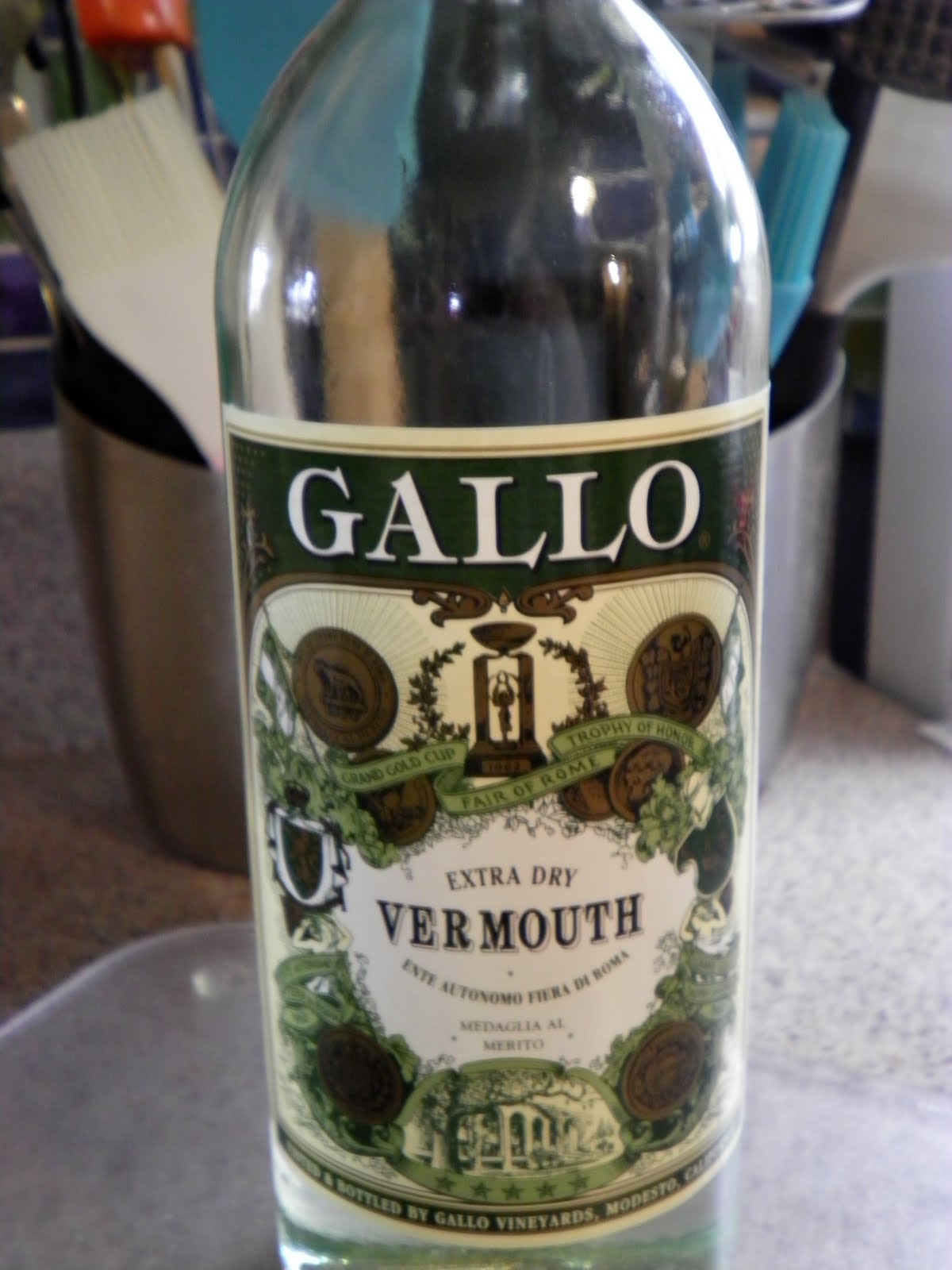
1 cup dry vermouth or sherry
1 teaspoon soy sauce
3 tablespoons unsalted butter
2 teaspoons juice from 1 lemon

Set oven rack to upper-middle position and preheat oven to 400 degrees. Using sharp kitchen shears, remove spine from chicken and cut into 5-6 1-inch long pieces.


This is kind of gross and difficult, but nothing my construction-paper-dulled kitchen shears couldn't handle. Set spine aside.

Flatten chicken by placing flat skin side up on cutting board and applying firm pressure to breast bone. Rub chicken on all surfaces with 1 tablespoon oil. Season generously with salt, ground black pepper, chopped herbs and various spices (I also used paprika, granulated garlic and ground mustard).


(Note: I apologize if you envisioned a gorgeously presentable, Norman Rockwell roasted chicken, perfectly trussed and plump for the table. This bird comes out of the oven ugly).

Set wire rack in rimmed baking sheet lined with aluminum foil. Position chicken so that breasts are aligned with center of baking sheet and legs are close to edge. Roast until thickest part of breast close to bone registers 150 degrees on an instant-read thermometer and joint between thighs and body registers at least 170 degrees, about 45 minutes.

Meanwhile, heat remaining tablespoon oil in small saucepan over high heat until shimmering. Add chicken spine and cook, stirring frequently, until well browned, about 3 minutes. Add onion, carrot, and celery and cook, stirring frequently, until beginning to brown, about 3 minutes. The aroma is unreal right now.


Add bay leaf and deglaze with vermouth or sherry and 1 cup water, using wooden spoon to scrape up any browned bits from bottom of pan. Reduce heat to maintain simmer and cook for 20 minutes.


Strain out solids and return liquid to pan. Boil over medium-high heat until approximately 1/3 cup remains, about 7 minutes. Whisk in soy sauce, butter, and lemon juice off heat. Season to taste with salt and pepper.

Remove chicken from oven, transfer to cutting board, tent loosely with foil, and allow to rest five minutes before carving. Serve with hot jus.

Drunken Citrus Chicken


Sticking to the rules of marinating (acid/oil/herbs), these skin-on, bone-in chicken thighs bathe in silver tequila (100% agave is always preferred), Meyer lemon juice, orange juice, lime juice, cilantro, jalapenos and green onions for 2-4 hours before cooking entirely under the broiler. Don't fear the broiler!


You will need:

4 skin-on, bone-in chicken thighs
Salt
Pepper
Paprika
Cayenne pepper
Garlic powder
Onion powder
Lime juice - the equivalent of two fresh-squeezed limes (about 3 tablespoons)
Juice of two Meyer lemons (if available - optional)
1/4 cup orange juice
Three green onions, white and light green parts only, chopped
2 jalapenos, roughly chopped, seeds and ribs intact
Handful cilantro
1 cup tequila (any kind)

Rinse chicken and pat dry. Season liberally with salt, pepper, paprika, cayenne, garlic powder and onion powder. Set aside in a medium-sized bowl.

In another bowl, combine tequila, citrus juices, green onions, jalapenos, cilantro and citrus rinds. Add a pinch of salt and pour over the chicken. Cover the bowl with plastic wrap and refrigerate for 2-4 hours, or overnight if possible. Remove the citrus rinds, cilantro and jalapenos before cooking!

Cover the bottom of a roasting pan with aluminum foil and place a roasting rack in the pan. Spray the rack and the bottom of the pan with cooking spray. Adjust the top rack of your oven to approximately 8 inches from the broiler; set broiler to low if possible. Keeping the door of the oven partially ajar, broil chicken thighs until they start to crisp, about 3 minutes. Flip and broil the other side until crispy, about another 3 minutes. Continue flipping chicken every 3-4 minutes, basting on occasion with leftover marinade, until an instant-read thermometer reads 165-170 degrees.

I set my smoke detector off approximately 87 times throughout the broiling and flipping process, but again, please don't fear the broiler! It's a misconception that food won't cook properly if cooked under the broiler, as it basically emulates an outdoor grill. As long as your chicken is far enough away from the broiler, and you pay close enough attention to the chicken as it's broiling, you can obtain a crispy (but not burnt) skin and fully-cooked meat. Crispy skin, juicy meat...what's so frightening?

Creamy Parmesan Chicken


This is a standby. I’ve made it for my parents, my grandparents, college roommates, my brother, Italian-food-hating friends, and picky children. I have yet to feed it to a person whose eyes haven’t rolled back in their head while asking for more sauce, and one ex-boyfriend went so far as to pour some leftover sauce over his popcorn. I don't recommend that, by the way, but it is a testimony to its decadence. It’s unexpected, and it’s so easy I could do it blindfolded.

My parents moved to Wisconsin in 2004. They stumbled upon a darling Italian restaurant in a nearby town called the Mississippi Belle, owned by Chef Frank Amendola, and brought us there one year for Christmas Eve dinner. My life as a home cook changed forever when I ordered the Chicken Bianco...I had to have that chicken in my life, but I would soon be far away from Wisconsin come the end of Christmas break. So I went back to school, and in my tiny dorm room kitchen practiced and perfected my own version of Chef Amendola’s recipe. And it’s a good thing, too – the restaurant is since under new ownership, and Chicken Bianco was removed from the menu. In fact, it's not even an Italian restaurant anymore.

I usually serve this with some broccoli sautéed in olive oil and garlic, and with a big loaf of toasted Italian bread. The sauce goes far, but it doesn’t reheat very well. If you must reheat it, do it in a saucepan over low heat, and add a little extra cream to keep the liquids from separating.

You will need:

4 whole boneless, skinless chicken breasts
2 slices deli ham
4 slices Mozzarella cheese (sandwich sliced)
2 tablespoons butter
2 cloves garlic, finely minced
1 pint heavy whipping cream, or a combination of heavy cream and half-and-half, equal parts of each
½ cups grated Parmigiano-Reggiano cheese (or any bagged/jarred/container of Parmesan will do)
1 teaspoon chopped flat leaf parsley
Salt and pepper, to taste
    Heat the oil over medium-high heat in a skillet.

    Pound the chicken breasts to flatten just slightly. Salt and pepper liberally on both sides.

    Add the chicken to the hot oil and brown on both sides, until cooked most of the way through (you will later finish the chicken in the oven). It should bounce back a bit when pressed with a finger. Remove chicken from the pan and drain off oil on paper towels.

    To make the sauce:
    While the chicken is cooking, melt butter in a separate skillet over low heat. Once butter is melted, add minced garlic and raise heat slightly. Cook until soft (do not allow garlic to brown).
    Pour in heavy cream and reduce heat. Once the cream starts to bubble/froth, add in Parmesan cheese and stir quickly to prevent it from sticking to the pan. Add chopped parsley and stir. Allow mixture to thicken, coating the back of a spoon; it should be slightly thinner than an Alfredo sauce. Add salt depending on the saltiness of your Parmesan cheese. Add cheese until sauce is sufficiently thick, and drop heat as low as possible to keep warm.

    To assemble the chicken:
    Cut 2 slices of ham in half, or into whatever size will cover your chicken breasts. Place one slice of ham and one slice of mozzarella on top of each breast and place into a glass baking dish. Top chicken breasts with the entire pan of sauce and place in a 400-degree oven. Cook for about 15 minutes, until the cheese browns slightly and the sauce bubbles.